Wildflowers of the Mojave Desert Desert Gazette
top >> mojave << features - wildlife - places - region map - map/sat - roads & trails - wilderness - video - aerial - 360 - old west - communities - books - lodging -
route 66 - ghost towns - gold mines - parks & ... - joshua tree - death valley - mojave preserve - plants - native culture - history - natural features - geology - glossary -
Wildflower Survival

Desert plants are resilient and their adaptations for surviving desert conditions are diverse and amazing.

A key to plant survival is is the ability to reproduce. The reproduction of most annual and perennial species is dependant on the power attraction to the flower.

The male parts of a flower are specialized to produce spores or pollen. Spores or pollen from the anther at the end of the stamen must find their way to the stigma. The female stigma is the surface on which spores or pollen must land (or be placed) during pollination. Here spores germinate and travel down the style of the pistil where fertilization takes place.

Pollen transfers from stamen to stigma in three ways: self-pollination, animal pollination and wind pollination. The process of self-pollination occurs when the pollen from an anther fertilizes an egg on the same flower. Wind pollination is a primitive method and generally occurs among plants that live close together such as grasses and trees. Tremendous amounts of pollen are needed to ensure that at least some wind borne spores make it to the correct stigma.

Spring flowers out on their annual show to attract animal pollinators from bees to hummingbirds. The colors and designs of flowers have developed over time to attract specific animals that fulfill their reproductive needs. Look into a Utah penstemon blossom and you will see patterns of color called "nectar guides." These guides are essentially runways with landing lights that lead the pollinator right to the nectar. Some flowers are generalists and do not care which animal pollinates them, while others have reliable partnerships. The yucca moth pollinates the yucca flower while she lays her eggs. In turn for her good deed, the yucca moth larva can feed on the developing seeds.

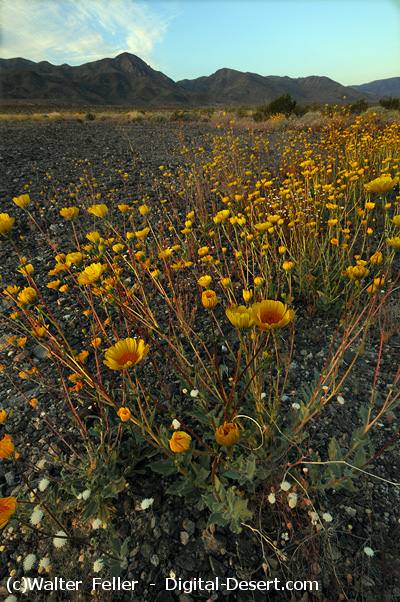
This spring, take a closer look at the attractive power of The Mojave Desert's flowers. From April to June, you will see desert marigolds and globemallow everywhere. Firecraker penstemon, small leaf amosonia and scarlet guara may dress up the canyons. Springs and sandy creeks will show off dune primrose, chia, prickly pear cactus, larkspur and Fremont phacelia. Spring and early summer are the best times to experience the beauty of the Mojave Desert in bloom.
Wildflower Photos

Wildflower Photo Guide

Wildflower List


Wildflower Photo Tours

Wildflowers < Joshua Tree - South Mojave Desert
A variety of blossoms throughout both deserts in the park

Wildflowers < Death Valley - North Mojave Desert
Up-Close look at wildflowers in Jubilee and Salsbury passes

Grapevine Canyon < Saline Valley - North Mojave Desert
Remote Saline Valley on the slopes of the Inyo Mountains

Fossil Falls < Owens Valley - North Mojave Desert
Wildflowers at dry falls between Indian Wells Valley and Owens Valley

Mojave Preserve < East Mojave Desert
Mojave Preserve flora

East Mojave < East Mojave Desert
Mojave Preserve and surrounding areas

Poppy Reserve < Antelope Valley - West Mojave Desert
Slideshow of State Poppy Reserve near Lancaster

Cajon Summit < Cajon Pass - West Mojave Desert
Within sight of the summit in Cajon Pass

Cajon Pass Wildflowers < Cajon Pass - San Bernardino National Forest
Along the east ridge of the canyon near the San Bernardino National Forest

Desert & Mountain < West Mojave Desert
Flowers from a variety of regions

El Mirage < Victor Valley - West Mojave Desert
Flowers in the El Mirage Area

Phelan < Victor Valley - West Mojave Desert
Flowers throughout Phelan


Also see > Cactus Photos
top >> mojave << features - wildlife - places - region map - map/sat - roads & trails - wilderness - video - aerial - 360 - old west - communities - books - lodging -
route 66 - ghost towns - gold mines - parks & ... - joshua tree - death valley - mojave preserve - plants - native culture - history - natural features - geology - glossary -
Wrightwood Real Estate
MOUNTAIN HOMES & CABINS
Vacation Rentals & Homes for Sale
Log Cabin Furnishings
Lodgepole Pine Log Furniture
Rustic Decor & Silhouette Metal Art
Victorville - Hesperia
~ HOMES FOR SALE ~
New Life Financial Services Realty
Google
 
Search:
Keywords:
Check out our...
>> RECOMMENDED BOOK LISTS <<
Mojave Desert & Mountains Communities:
Victorville - Hesperia - Apple Valley - *Adelanto - Baker - Barstow - *Lucerne Valley - Big Bear - Lake Arrowhead - Yucca Valley - Joshua Tree - Twentynine Palms - Palmdale - Lancaster - Mojave - Tehachapi - California City - *Boron - Ridgecrest - *Randsburg - Nipton - Shoshone - Tecopa - Death Valley Junction - Needles - Lone Pine - Big Pine - Bishop - Independence - Trona -
Digital-Desert
Abraxas Engineering
privacy
Copyright ©Walter Feller. All rights reserved.
Respect U.S and international copyright statutes and our right to own and control our work
- DO NOT LINK TO THESE IMAGES FROM WEB PAGES, FORUMS OR BLOGS -
Desert Gazette
47244