Digital-Desert : Mojave Desert
features - ecology: wildlife - plants - geography: places - region map - map/sat - roads & trails: route 66 - video - aerial - 360 photos - old west - communities - lodging
ghost towns - gold mines - parks & ...: joshua tree - death valley - mojave preserve - wilderness - native culture - history - geology: natural features - glossary - comments

Desert Wildlife

Desert Food Chains

Food chains allow us to examine the basics of how energy passes through an ecosystem.
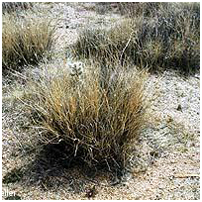
Producer

Consumer

Predator

A food chain is sequence of plants, herbivores and carnivores, through which energy and materials move within an ecosystem. Food chains are usually short and not more than three or four links. They usually consist of a producer, a consumer and a predator, with the predator being the top of the food chain. The top of the desert food chain does eventually die though, and is returned to the bottom of the chain as nutrients by decomposers.

Typical Desert Food Chains
Mountain Lion
Mule Deer
Plant (forbs)

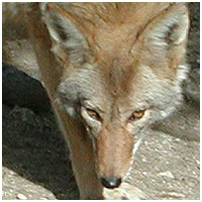
Coyote
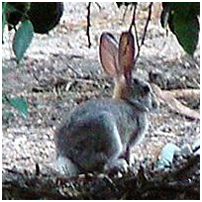
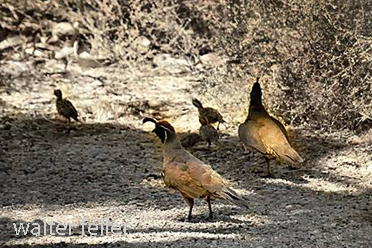
Quail
Plant (shrub seeds)
Snakes
Lizards
Insects
Plant (wildflower/grass seeds)
Hawk
Snakes
Rats
Plant (seeds)
Desert Food Pyramid

A pyramid representing trends in food consumption, with the lowest level (primary producers) having the greatest total biomass, and the higher consumer levels having successively less total biomass.

The concept of a pyramid of consumers in an ecosystem helps to understand how an organism fits into a community as a whole.

Typical Desert Food Pyramid

4th Trophic Level:
Tertiary Consumers
Carnivores
These are high level consumers, carnivores that will eat other carnivores.


3rd Trophic Level:
Secondary Consumers
Small Carnivores
The predators are the secondary consumers. They occupy the third trophic level. Again we see cold-blooded animals, such as snakes, insect-eating lizards, and tarantualas. Only about 2 Kilocalories per square meter per year are stored in their bodies. In the harsher desert environments, they are the top predators.

2nd Trophic Level:
Primary Consumers
Herbivores
These animals are usually small and eat little. Many are insects, or reptiles, who are cold blooded and who use less energy to maintain their bodies than mammals and birds do. As food for predators, they provide about 20 Kilocalories per square meter per year for predators.
Including:
Ants and other insects, rats and mice, some reptiles the largest of which are the tortoise and chuckwalla.

1st Trophic Level:
Primary Producers
Plants
These are plants that make food through photosynthesis. Limited by the availability of water, they produce fewer than 200 Kilocalories of food for the animals for each square meter each year.
Including:
Trees, shrubs, cactus, wildflowers, grasses

Primary Producers

Food chains are divided into nutritional or trophic levels. The first trophic, or lowest level, is occupied by the primary producers, plants.

Plants produce energy from photosynthesis. Plants produce energy to use for survival, growth and to store when production resources are not available. The amount of energy produced is measured in kilocalories and limited by the availability of sunlight, water and nutritional resources available to the plant. In the desert biome water is the determining resource. In an environment where water is readily available (such as an oasis, spring or desert riparian biomes) more plant diversity is available and more kilocalories of energy are produced. In a sparse, dry ecosystem, where plants can not survive unless widely spaced, only about 200 kilocalories of food per square meter per year are produced.


Primary Consumers

Primary consumers are the animals that eat the plants. These animals, including insects, occupy the second trophic level. Energy is tranferred from the plants to the consumers as food for the consumers. Although primary consumers are for the most part herbivorious, this is where the line between the primary and secondary consumers begins to blur.

In a mammal, such as the desert pocket mouse, food is consumed and converted to energy. The mouse, being warm-blooded, uses this energy in several ways.

    1. The mouse recieves stored energy by eating food.

    2. The mouse's metabolism converts stored energy from the food to available energy for it's survival. To survive the mouse needs to grow, acquire more food, escape predators, etc). Some energy is lost to heat, but this heat can be helpful to keep the mouse's body at a normal temperature in cold weather.

    3. Some energy is lost in the production and passing of waste as unprocessed nutrients.

    4. About 90% of the energy the mouse converts from food is stored and used by the mouse. The remaining 10% is available for consumption by predators at the next trophic level.

Secondary Consumers - Small Predators

Tertiary Consumers - Large Predators

This page is currently being developed. Please pardon the inconvenience and check back soon for more complete information.

    Desert Food Chains

    Desert Food Pyramid

    Desert Food Web

Notes:

Man is the top predator in any desert environment whether by intention or accident. An example of this is the coyote. The coyote's natural predator was at one time the wolf. The wolf has been extirpated from the Mojave Desert by man, however, man and his motor vehicles have taken the place of the wolf as the primary killer of coyotes.


The tortoise and the chuckwalla are the largest reptilian herbivores in the Mojave. The tortoise will only eat plants throughout it's life cycle while young chuckwallas have been known to sample a grasshopper or two.


Mule deer and bighorn sheep are the largest mammalian herbivores in the Mojave. Mule deer are the prefered prey of the mountain lion, while bighorn sheep are often in areas too vertical and dangerous for the big cats to successfully attack. Coyotes will sometimes corner and kill an older bighorn as a pack, but prefer to scavenge the carcass of the sheep killed by it's most dangerous predator- fly larvae. Flies will lay eggs in the nostrils of the bighorn. As the eggs grow into larvae, the bighorn suffocates.


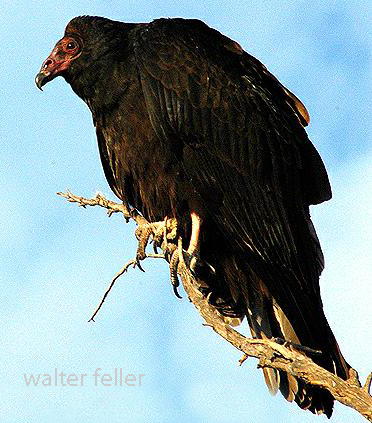
Scavenger

features - ecology: wildlife - plants - geography: places - region map - map/sat - roads & trails: route 66 - video - aerial - 360 photos - old west - communities - lodging
ghost towns - gold mines - parks & ...: joshua tree - death valley - mojave preserve - wilderness - native culture - history - geology: natural features - glossary - comments
Country Life Realty
Mountain Homes and Real Estate for Sale

~ Wickless Candles by Scentsy ~
The Most Wonderful Time of the Year ...
... Is here
MH Sleds
Saucer sleds for the snow
Life time guarantee!!!

Abraxas Engineering
privacy
Copyright ©Walter Feller. All rights reserved.
386666