More Interesting Facts
Size Difference - Female raptors are generally larger than the males. The reason for this size
difference is really unknown, but scientists theorize that it could relate to the female spending
more time on the nest and can protect the young from larger predators. Another idea for this
difference is that it allows for a greater diversity of prey to be taken by the adult pair.
Eyes - Raptors have three eyelids! They have a top and bottom eyelid plus a third, transparent
eyelid which closes laterally across the eye. This special eyelid is called a nictitating membrane
and is used to
- keep the eyes moist,
- protect the eyes during flight, and
- protect the eyes when feeding themselves or their young.
When humans close their eyes to blink or sleep the upper eyelid closes. Depending on the
species, raptors may close the top eyelid, the bottom eyelid, or both.
An additional form of eye protection in many raptors is a bony shield, called the superciliary
ridge, that projects above the eye. This ridge acts like a visor for protection from the sun and also
protects the eyes from injury while hunting. It also gives raptors a menacing appearance.
Nests - Nesting habits of raptors vary among species. Some examples of these differences
include:
- not building a nest, but using stick nests or cavities created by other birds,
- nesting and laying eggs in sand or gravel, depressions, or scrapes,
- nesting and laying eggs on the ground,
- nesting and laying eggs on cliff faces or in treetops,
- nesting and laying eggs in ground burrows of mammals (burrowing owls).
For raptor species that build nests, typically the female constructs the nest while the male
provides the material. Many raptors build a new nest each year, while others, particularly large
raptors, will reuse old nests or alternate between a number of nests.
Eggs - Raptor eggs are typically large, rounded or oblong ovals, and vary in color. The number
of eggs laid depends on their size. Larger raptors lay fewer eggs than smaller raptors. It is
believed that larger raptors live longer and need fewer eggs or young to sustain the viability of the
species, while the opposite is true for smaller raptors.
There may be a two to three day lapse between laying each egg, and the adult may not begin
incubation until all the eggs are laid (owls begin incubation immediately after the first egg is laid).
The female does the incubating while the male provides food for her. The period of incubation
varies with the size of a bird. For owls, hawks, and falcons there is usually a 26 to 35 day
incubation period, while eagles and vultures will incubate from 36 to 50 days. Raptors in
temperate climates breed in spring and summer.
After an eggshell is first cracked, it may take one to two days before hatching is complete.
Raptor chicks grow quickly, doubling their birth weight in only a few days. The length of time a
raptor spends from hatching until it is ready to fledge (fly on its own), depends on its size. Larger
raptors stay in the nest from two to three months, while smaller raptors stay three to four weeks.
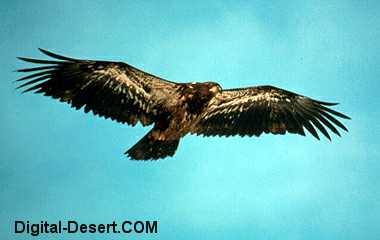
Female Golden Eagle - BLM photo
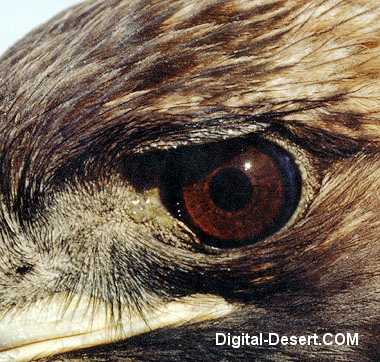
Raptors have three eyelids - USFWS photo
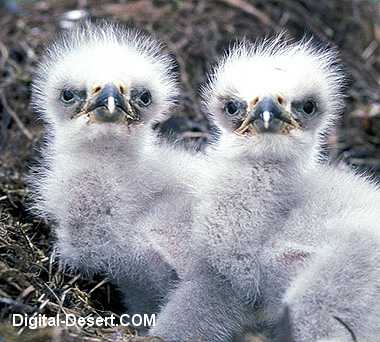
Bald Eagle chicks - USFWS photo
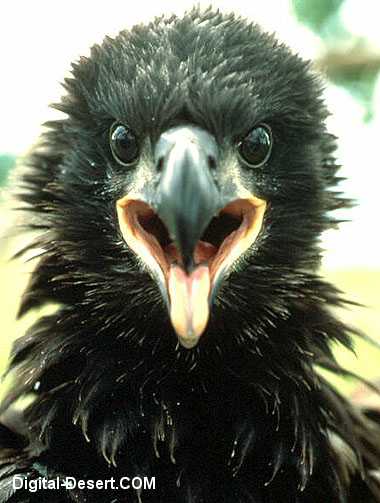
Bald Eagle Flegdling - USFWS photo